Headquarters Everywhere: How San Luis Obispo's Distributed Companies Are Turning Remote Work Into a Regional Advantage
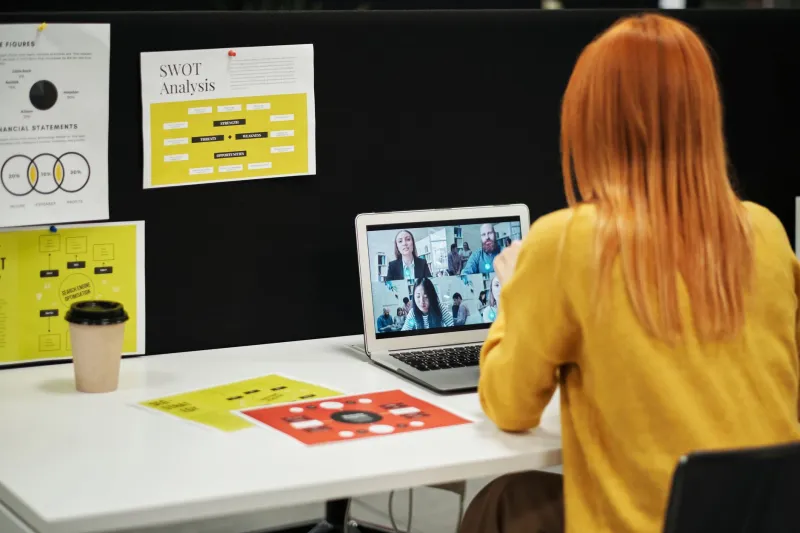
For most of the past century, a company's address told you something concrete about its ambitions. Talent gathered where offices stood. Growth meant square footage. Presence meant proximity. That logic held — until it didn't.
In San Luis Obispo, a quiet but significant shift is underway. A cohort of local businesses has stopped treating distributed work as an inconvenient byproduct of a changed labor market and started treating it as a deliberate strategic posture. These are not companies reluctantly accommodating remote employees. They are organizations that have restructured their operations, culture, and hiring practices around the premise that the best team for the job may never set foot in the same room — and that this is, in fact, a competitive advantage.
The implications for SLO's regional economy are more substantial than they might initially appear.
The Architecture of Intentional Flexibility
There is a meaningful difference between a company that allows remote work and one that is built for it. The former tends to treat in-office employees as the default and distributed workers as exceptions to be managed. The latter inverts that assumption entirely, designing workflows, communication norms, and accountability structures so that geography is genuinely irrelevant to contribution.
Several San Luis Obispo firms have made that architectural leap. In sectors ranging from software development and digital marketing to professional services and specialty manufacturing coordination, local operators have invested in the tools, documentation practices, and management philosophies that remote-first operations require. Asynchronous communication protocols replace the assumption of real-time availability. Written documentation supplants institutional knowledge passed across a conference table. Outcomes displace attendance as the primary measure of performance.
This is not a trivial transition. It demands discipline from leadership and a willingness to redesign processes that organizations have spent years taking for granted. But for those who have made the investment, the returns are tangible.
Talent Without Borders — Rooted in Place
Perhaps the most immediate benefit is access to a dramatically expanded labor pool. San Luis Obispo has long contended with a structural tension: the region produces exceptional graduates through Cal Poly and Cuesta College, attracts skilled professionals drawn to the quality of life, yet struggles to offer the compensation packages that larger metropolitan markets can sustain. Remote-first operations partially dissolve that tension.
When a company can hire a senior software engineer in Austin, a marketing strategist in Chicago, or a financial analyst in Atlanta — while maintaining its operational headquarters and cultural center of gravity in SLO — the calculus changes. The local business gains access to specialized skills it could not recruit regionally. The region gains a company that pays local taxes, participates in the local economy, and contributes to the community fabric, even as its workforce spans time zones.
Equally important, remote-first structures give SLO-based companies a compelling retention tool for the local talent they do employ. When the alternative to staying in San Luis Obispo is leaving for a higher-paying position in a coastal metro, the ability to offer flexibility, quality of life, and competitive compensation — without demanding relocation — becomes a powerful counterargument. Employees who might otherwise have departed for San Francisco or Los Angeles find they can build meaningful careers without sacrificing the place they have chosen to call home.
Infrastructure as Investment
Building a functional remote-first organization is not simply a matter of issuing laptops and subscribing to a video conferencing platform. It requires genuine infrastructure investment — both technical and cultural.
On the technical side, reliable high-speed internet access remains a foundational requirement, and SLO's ongoing broadband expansion efforts are directly relevant to this conversation. Businesses operating distributed teams need connectivity that performs consistently, not just in commercial corridors but across the residential neighborhoods and surrounding communities where employees live and work.
Beyond connectivity, remote-first companies invest in project management systems, cybersecurity frameworks, and digital collaboration environments that can support teams operating across multiple time zones without degrading the quality of communication or decision-making. These are not negligible expenditures, particularly for smaller businesses, but regional organizations and economic development partners have a meaningful role to play in helping local firms access the resources and guidance needed to make these transitions successfully.
The cultural infrastructure is equally consequential. Remote-first companies that thrive tend to be deliberate about building cohesion in the absence of physical proximity. This means intentional onboarding processes, regular virtual touchpoints, and — crucially — periodic in-person gatherings that reinforce shared identity and trust. For SLO-based companies, this often means bringing distributed team members to the Central Coast for retreats, offsites, and collaborative work sessions. The region's natural appeal becomes, in this context, a genuine business asset: a destination that team members are genuinely motivated to visit.
Cross-Industry Collaboration and the Network Effect
One underappreciated consequence of the remote-first shift is the cross-industry collaboration it is quietly enabling. As SLO companies build distributed teams that include professionals from diverse geographic and sectoral backgrounds, they are importing perspectives and networks that would not otherwise circulate within the regional economy.
A local marketing firm whose team includes former agency professionals from New York and Seattle brings with it relationships, methodologies, and market knowledge that enrich not just its own practice but the broader ecosystem of clients and partners it serves. A SLO-based technology company with engineers distributed across the Mountain West develops exposure to regional markets, investor networks, and partnership opportunities that a purely local hiring strategy would never generate.
This dynamic has the potential to accelerate one of the more persistent challenges facing SLO's entrepreneurial community: the gap between local innovation and external market access. Distributed teams are, by definition, connected to multiple geographies simultaneously. When those connections are cultivated intentionally, they become channels through which capital, customers, and collaboration can flow back toward the Central Coast.
A Model Worth Scaling
The companies leading this transition in San Luis Obispo are not anomalies. They are early demonstrations of a model that more regional businesses have the capacity to adopt — if the ecosystem around them develops the support structures to help.
That means mentorship networks where remote-first operators share operational knowledge with businesses earlier in the transition. It means workforce development programs that prepare local talent for the self-direction and communication skills that distributed environments demand. And it means economic development strategies that recognize distributed companies as genuine anchors — not footloose operations that might vanish overnight, but businesses with deep community ties and a structural incentive to remain rooted in the place that gives them their identity.
San Luis Obispo has always offered something that most business environments cannot manufacture: a quality of life that draws people in and earns their loyalty. The remote-first model does not diminish that asset. It amplifies it — transforming the region's livability from a recruiting footnote into a core element of the value proposition that SLO businesses bring to the national talent market.
The address still matters. It just no longer defines the limit of what a company can build.