The Quiet Edge: Why San Luis Obispo's Business Community Outperforms the Hype

The Myth of the Only Path Forward
Open any major business publication and the template for entrepreneurial success looks remarkably similar: a founding team with elite academic credentials, a seed round from a recognizable venture firm, a product designed to disrupt an existing market, and a growth trajectory measured in hockey-stick projections. The geography of this narrative is equally predictable—San Francisco, Austin, New York, Seattle.
San Luis Obispo does not typically appear in that story. And yet, by many meaningful measures, the entrepreneurial ecosystem here is producing outcomes that the venture-backed model frequently fails to deliver: sustainable profitability, long-term employment, deep community integration, and businesses that endure across decades rather than burning brightly and collapsing under the weight of inflated expectations.
This is not an argument against ambition or growth. It is an argument for reconsidering what success actually looks like—and for recognizing the genuine competitive advantages that a community like SLO offers entrepreneurs who are paying attention.
The Relationship Dividend
In high-density startup ecosystems, professional relationships are often transactional by necessity. The volume of people, deals, and opportunities creates an environment where depth is sacrificed for breadth. Networking events are populated by people exchanging business cards with half their attention already on the next conversation.
The dynamic in San Luis Obispo is fundamentally different. In a community of this scale, professional relationships develop with a depth and authenticity that is difficult to manufacture in larger markets. The accountant you meet at a Chamber event is likely to become a genuine professional ally. The fellow business owner you encounter at a RISE SLO workshop may become a collaborative partner, a referral source, or a mentor whose counsel proves invaluable during a difficult stretch.
This relational density creates what economists sometimes call social capital—a form of value that is notoriously difficult to quantify but unmistakably real in its effects. When you need a trusted contractor, a reliable supplier, or an introduction to a potential client, those connections materialize through relationships that have been cultivated over time within a shared community context.
Venture-backed startups in major metros spend considerable resources trying to replicate this kind of trust infrastructure through formal programs, paid advisors, and curated accelerator cohorts. In SLO, it develops organically through the simple fact of shared geography and repeated interaction.
The Economics of Operating Here
The cost of doing business in San Luis Obispo is not trivial—California's regulatory environment and cost of living present real challenges for entrepreneurs at every stage. But measured against the primary markets that dominate the startup conversation, the economics shift considerably.
Commercial lease rates in SLO, while not inexpensive by national standards, remain substantially below those in San Francisco, Los Angeles, or New York. Labor costs, while reflective of California's minimum wage structure, do not carry the premium that talent competition in major tech corridors demands. For a business that does not require proximity to a specific industry cluster, the cost differential between operating in SLO and operating in a major metro can represent a meaningful structural advantage.
Lower overhead does not merely improve margins—it fundamentally changes the risk profile of a new venture. A business that reaches profitability at a lower revenue threshold is more resilient, requires less external capital, and gives its founder more time and flexibility to build something sustainable. The pressure to grow at all costs, which defines so much of the venture-backed startup experience, is considerably reduced when the cost structure does not demand it.
This is not a minor footnote. It is one of the most consequential differences between building a business in a community like SLO and building one in a market defined by high burn rates and compressed runways.
Customers Who Are Invested in Your Success
Perhaps the most underappreciated advantage of building a business in a tight-knit community is the nature of the customer relationship. In large anonymous markets, customers are largely indifferent to the ownership structure of the businesses they patronize. The choice between a local independent and a national chain is, for many consumers in those environments, purely transactional.
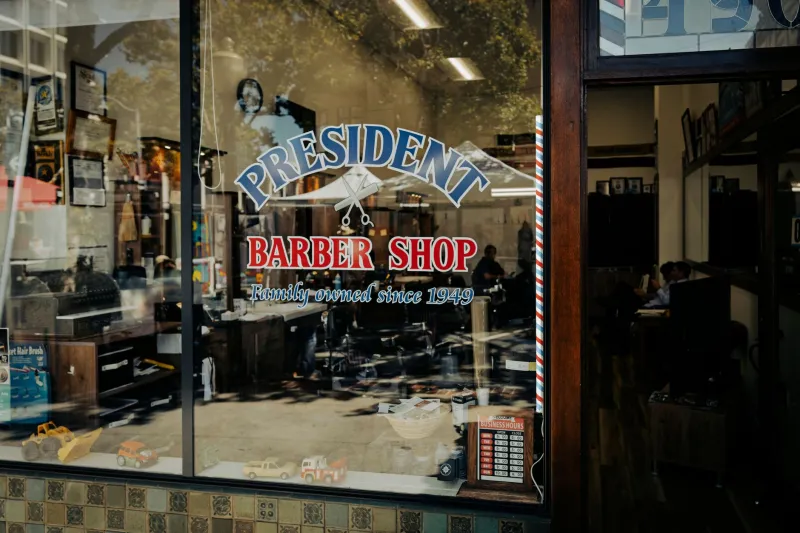
In San Luis Obispo, that dynamic is measurably different. Local identity is a genuine value for a significant portion of the consumer base. Residents who have chosen to build their lives here tend to feel a meaningful connection to the businesses that constitute their community. When a local business succeeds, many customers experience it as a shared victory. When one struggles, the community frequently rallies.
This is not sentimentality. It is a competitive advantage with real financial implications. Customer acquisition costs are lower when word-of-mouth referrals flow through an engaged community. Customer retention is higher when loyalty is rooted in genuine relationship rather than points programs and promotional pricing. The lifetime value of a customer who genuinely wants to see your business thrive is substantially higher than that of a consumer whose engagement is purely transactional.
Venture-backed companies spend enormous sums attempting to build community around their brands. In SLO, that community is the pre-existing condition.
The Talent Equation
One of the most persistent arguments for building in major tech corridors is access to talent. The concentration of skilled workers in those markets is real, and for certain categories of businesses—particularly those requiring deep technical specialization—proximity to that talent pool matters.
But the talent equation in SLO is more nuanced than it first appears. California Polytechnic State University, San Luis Obispo generates a consistent pipeline of graduates across engineering, business, agriculture, architecture, and the liberal arts. Many of those graduates actively seek opportunities to remain in the region they have come to call home. For a local business positioned to offer meaningful work and a quality of life that the Bay Area cannot match, recruiting from that population represents a genuine competitive opportunity.
Furthermore, the businesses that thrive in SLO are not exclusively competing for the same narrow band of talent that Silicon Valley demands. The diversity of the regional economy—spanning agriculture, hospitality, professional services, retail, construction, and technology—means that the talent requirements are correspondingly varied. The depth of the regional talent pool, relative to those requirements, is often more than adequate.
Redefining What Success Requires
The venture capital model is not without its virtues. It has funded genuinely transformative companies and created substantial economic value. But it is a model designed for a specific set of circumstances: massive addressable markets, winner-take-all competitive dynamics, and founders willing to accept significant dilution and loss of control in exchange for rapid scale.
Most businesses—and most entrepreneurs—do not fit that profile. They are building companies designed to serve a specific community, solve a defined problem, and generate sustainable returns over a long time horizon. For those entrepreneurs, the metrics that define success in the venture world are largely irrelevant.
At RISE SLO, we work with entrepreneurs who are building exactly those kinds of businesses. And what we observe consistently is that the San Luis Obispo environment, far from being a limitation, provides the conditions in which that model of entrepreneurship can thrive: authentic relationships, a supportive customer base, manageable operating costs, and a community that has a genuine stake in the success of its local economy.
The quiet edge is real. It simply requires entrepreneurs who are looking for it.