The Hidden Engine: How SLO's Logistics and Supply Chain Networks Power Regional Prosperity
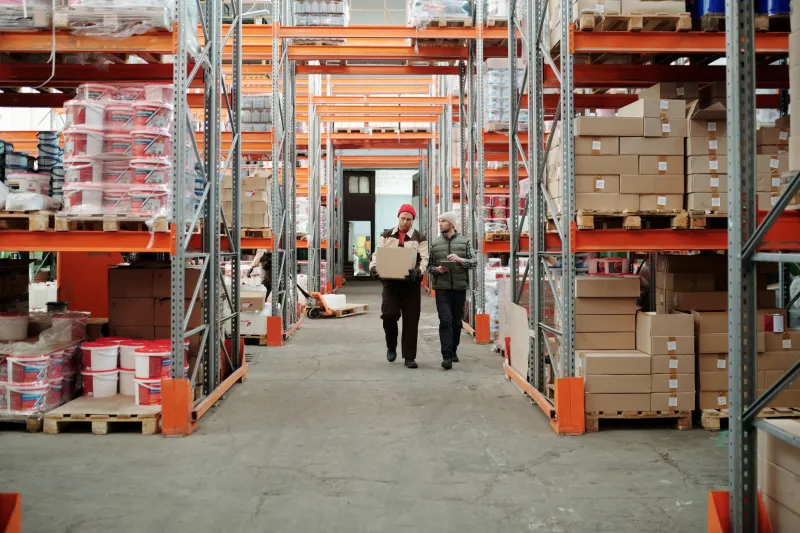
When residents browse a farmers market stall, order from a local winery's e-commerce page, or stock their kitchen from a Central Coast grocery, they rarely pause to consider the layered network of decisions, relationships, and physical infrastructure that made that transaction possible. Yet in San Luis Obispo County, that invisible architecture—the warehouses, freight corridors, cold-storage facilities, and inventory management systems—represents one of the most consequential and least-celebrated pillars of the regional economy.
For economic development practitioners and business leaders alike, the conversation around supply chain resilience has grown considerably more urgent in the years following pandemic-era disruptions. What was once a back-office concern has become a strategic priority, and communities that invest in strengthening their logistics backbone stand to gain a meaningful competitive advantage.
More Than Moving Boxes
The term "supply chain" often conjures images of container ships and interstate trucking—a macro-level abstraction far removed from daily life in a mid-sized California coastal community. But in San Luis Obispo, the supply chain conversation is deeply local and extraordinarily consequential.
Consider the agricultural sector alone. San Luis Obispo County is home to thousands of acres of wine grapes, specialty produce, and livestock operations. Getting those goods from farm to table—or from vineyard to distributor to restaurant—requires a coordinated infrastructure that includes cold-chain logistics, bonded warehousing, regional trucking networks, and export-capable packaging facilities. When any single link in that chain weakens, the effects ripple outward to farmers, processors, retailers, and ultimately consumers.
Local manufacturers face similar dependencies. Companies producing everything from precision components to artisan food products rely on reliable inbound material flows and outbound distribution capacity. A disruption to either can stall production, damage customer relationships, and erode the financial stability that allows businesses to grow and hire locally.
The People Behind the Process
Among the most underappreciated figures in SLO's economic ecosystem are the operators who run the region's third-party logistics providers, freight brokerages, and distribution hubs. These are not glamorous roles, but they are foundational ones.
Small and mid-sized logistics firms operating in the county serve as critical connective tissue between local producers and the broader marketplace. They negotiate freight rates, manage customs documentation for export-bound goods, coordinate last-mile delivery in a region where geography can complicate even routine shipments, and advise clients on inventory positioning strategies that reduce carrying costs without creating stockout risk.
For many smaller SLO businesses, these logistics partners effectively serve as an outsourced operations department—providing expertise and infrastructure that would be prohibitively expensive to replicate in-house. That relationship is particularly vital for the county's growing cohort of direct-to-consumer brands, which must manage fulfillment at scale while preserving the quality and presentation standards their customers expect.
Geographic Challenges and Strategic Opportunities
San Luis Obispo's location along the Highway 101 corridor positions it as a natural waypoint between the Los Angeles Basin and the Bay Area—two of the nation's largest consumer markets. That geographic reality is both an asset and a constraint.
On one hand, SLO-based producers have reasonable access to major distribution hubs and population centers within a few hours' drive. On the other, the county lacks the dense freight infrastructure—intermodal rail yards, major air cargo facilities, large-scale fulfillment centers—that characterizes logistics-intensive regions. Businesses that require rapid national distribution often find themselves routing goods through Los Angeles or the Central Valley, adding cost and complexity to their operations.
This gap represents a genuine opportunity for strategic investment. Community leaders and economic development organizations have begun exploring how targeted infrastructure improvements—expanded industrial zoning, investment in cold-storage capacity, improved freight access along key corridors—could reduce friction for local businesses and attract new manufacturing and distribution operations to the region.
Resilience as a Community Value
The broader lesson of recent supply chain disruptions is that resilience is not simply a business strategy—it is a community value. Regions with diversified, locally anchored supply networks recovered more quickly from pandemic-era shocks than those dependent on single-source suppliers or distant distribution hubs. San Luis Obispo has an opportunity to apply that lesson proactively.
Building supply chain resilience in SLO means several things simultaneously. It means supporting local manufacturers with access to industrial space, workforce training, and capital. It means investing in the logistics service providers that connect those manufacturers to markets. It means creating deliberate linkages between local producers and institutional buyers—schools, hospitals, government agencies—that can provide stable, predictable demand. And it means ensuring that the region's transportation infrastructure can accommodate the freight volumes that a growing economy generates.
None of these investments happen automatically. They require intentional coordination among public agencies, private businesses, and community organizations—precisely the kind of collaborative economic development that defines the most resilient regional economies in the country.
What Growth Looks Like From the Loading Dock
For the entrepreneurs and operators who work within SLO's supply chain ecosystem, the opportunity ahead is tangible. As e-commerce continues to reshape consumer behavior and as more brands seek to diversify away from single-source supply arrangements, regionally anchored logistics providers are increasingly well-positioned to compete.
The region's quality of life, relatively affordable industrial real estate compared to coastal urban markets, and proximity to major California population centers create a genuine value proposition for logistics-oriented businesses considering relocation or expansion. Economic development strategies that communicate this value proposition clearly—and that pair it with meaningful infrastructure investment—could catalyze significant growth in a sector that already quietly employs thousands of San Luis Obispo County residents.
The supply chain is not a footnote to SLO's economic story. It is, in many respects, the story itself—the unglamorous, essential infrastructure upon which every other form of business growth depends. Recognizing that fact, and investing accordingly, is one of the most important things the region can do to secure its long-term economic future.