Small by Design: Why Some of SLO's Smartest Founders Are Choosing Limits Over Scale
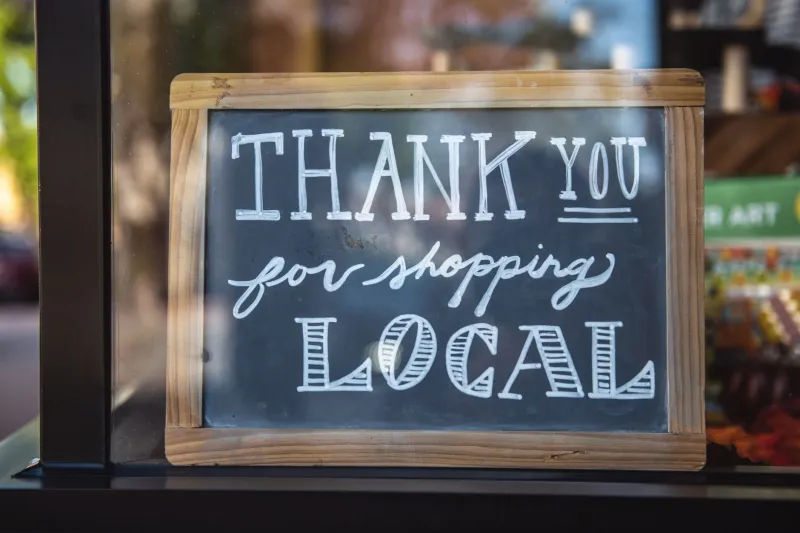
The conventional narrative of entrepreneurial success follows a familiar arc: launch, grow, scale, exit. Bigger revenues, larger teams, expanded markets—the assumption is that a thriving business is always a growing one. But in San Luis Obispo, a notable number of founders are quietly rejecting that script, not out of complacency, but out of deliberate strategic intent.
These are not entrepreneurs who have failed to grow. They are entrepreneurs who have chosen not to.
The Paradox of the Profitable Ceiling
For many SLO-based business owners, the decision to impose a ceiling on growth arrives not during a crisis, but at the moment of greatest opportunity. Orders are coming in faster than they can be filled. Investors are circling. The logical next step, by most conventional measures, would be to hire aggressively, take on capital, and push into new markets.
Instead, some founders are pausing—and then consciously pulling back.
The reasoning is rarely sentimental. It is, in many cases, deeply economic. In a region where the cost of living is high, the talent pool is specialized, and the pace of life is considered a feature rather than a liability, scaling a business carries hidden costs that spreadsheets rarely capture. Rapid headcount growth strains the internal culture that made the business distinctive in the first place. Expanding service areas erodes the local reputation that drives referrals. Taking on outside investment introduces obligations that can misalign with a founder's original vision.
In San Luis Obispo, where personal relationships are not merely pleasant but functionally essential to commerce, those costs can be decisive.
Relationships as a Business Model
What distinguishes the SLO business environment from larger metropolitan markets is the degree to which trust and proximity function as genuine economic infrastructure. Contracts are frequently won—and retained—on the strength of longstanding personal relationships. Referrals travel through tight community networks. A business owner's reputation in one context routinely bleeds into another.
This dynamic creates a compelling incentive to stay legible to the community. When a business grows beyond a certain size, it can become anonymous—an entity rather than a neighbor. And in a region where customers actively choose local precisely because they want to know who they are doing business with, anonymity is a liability.
Founders who understand this are making a calculated trade. They are exchanging the theoretical upside of scale for the durable advantage of being known—and trusted—in a place where that distinction carries real commercial weight.
The Operational Case for Staying Small
Beyond the relational dimension, there is a growing body of practical evidence that deliberate smallness produces superior operational outcomes in certain market conditions.
Small teams communicate more efficiently, adapt more quickly, and maintain quality standards with greater consistency. Founders who remain closely involved in day-to-day operations can catch problems early, respond to client needs in real time, and make decisions without the friction of organizational hierarchy. In service-based industries—which represent a significant portion of SLO's business landscape—this agility is often the primary differentiator.
There is also the matter of financial resilience. Businesses that grow cautiously tend to carry less debt, maintain healthier margins, and weather economic disruption more effectively than those that have scaled rapidly on borrowed capital. The lean operating models that constrained growth encourages can become a meaningful buffer when conditions shift.
For entrepreneurs in a region that has experienced its share of economic volatility—driven by fluctuations in tourism, agriculture, and the broader California regulatory environment—that buffer is not a minor consideration.
Quality of Life as a Strategic Variable
San Luis Obispo's appeal as a place to build a business is inseparable from its appeal as a place to live. The mild climate, the proximity to the coast, the walkable downtown, the relative quiet—these are not incidental amenities. For many founders, they are the reason the business exists here at all.
Scaling a company to the point where the founder is working seventy-hour weeks, managing a large and complex organization, and traveling constantly to serve geographically dispersed clients would, for many of these entrepreneurs, defeat the purpose. The business would have consumed the very life it was meant to support.
This is not a fringe perspective. Across the country, a growing number of researchers and practitioners studying entrepreneurship have begun to formally examine what they call "lifestyle-integrated" business models—companies deliberately structured to sustain the founder's quality of life as a primary objective, alongside profitability. In SLO, this approach has deep roots, and it is increasingly being recognized not as a lack of ambition but as a sophisticated form of it.
The Discipline of Saying No
Perhaps the most underappreciated skill among SLO's intentionally small founders is the capacity to decline opportunity. Turning away clients, capping service offerings, refusing partnerships that would require operational expansion—these decisions run counter to every reflex that entrepreneurial culture tends to reinforce.
But the founders who have mastered this discipline describe it in consistent terms: saying no to the wrong growth makes room for the right work. It preserves the conditions—creative, relational, financial—under which the business performs at its best. And it signals to clients, collaborators, and the broader community that the business is not in the business of becoming something it is not.
In a marketplace crowded with companies chasing scale for its own sake, that clarity can itself become a differentiator.
What This Means for the Broader Regional Economy
The implications of this trend extend beyond individual business decisions. A regional economy populated by a dense network of stable, deeply embedded, deliberately scaled enterprises carries structural advantages that aggregate data often obscures.
These businesses tend to retain their workforce locally, circulate spending within the community, and invest in civic life over long time horizons. They are less likely to relocate when costs rise or conditions change. They are more likely to mentor the next generation of local entrepreneurs, support regional nonprofits, and participate in the collaborative networks that make a business community more than the sum of its parts.
For an organization like RISE SLO, which exists to strengthen the economic fabric of this region, the deliberate small business is not a consolation prize. It may, in many respects, be the model most aligned with the kind of durable, community-rooted prosperity that defines this region at its best.
Redefining What Success Looks Like
The entrepreneurs choosing to stay small are not opting out of ambition. They are redirecting it—toward depth rather than breadth, toward longevity rather than exit multiples, toward a version of success that holds together over time.
In San Luis Obispo, where the landscape itself seems to counsel a certain groundedness, that redirection may be less counterintuitive than it first appears. The founders who have made it are not retreating from the market. They are, in their own considered way, mastering it.